September 3, 2026
Your kitchen should reflect the way you live, cook, gather, and enjoy your home. While appliances, countertops, and flooring all contribute to the overall design, cabinetry often has one of the greatest visual and functional impacts. Customizing your cabinets allows you to create a space that better matches your style while also improving organization and convenience. From selecting colors and finishes to adding specialized storage features, there are many ways to make the room feel more personal. Thoughtful design choices can also help you make better use of the available space, whether your kitchen is large or compact. The right details can create a more cohesive appearance while supporting your everyday routines. By exploring different customization options, homeowners can create a kitchen that feels both practical and visually appealing. Here are eight ways to personalize your cabinetry and create a space that works for your needs.
1. Choosing Colors That Match Your Style
Color is one of the most noticeable ways to personalize kitchen cabinets and influence the atmosphere of the entire room. Lighter shades can create an open and airy feeling, while darker tones may add contrast and depth. Homeowners can also explore green, blue, or other statement colors to introduce more personality into the space. According to WifiTalents, blue is the leading non-neutral cabinet color choice, accounting for approximately 7% of selections. A carefully chosen color can complement the countertops, backsplash, flooring, and other design elements throughout the kitchen. Some homeowners prefer a single color for a consistent appearance, while others combine shades for a two-tone design. The color selection should support the overall style of the home rather than follow a trend that may not suit the space. Taking time to compare samples in different lighting conditions can help you feel more confident about the final choice.
2. Selecting Finishes That Enhance the Design
The finish you choose can significantly affect the final appearance and character of the cabinetry. A smooth painted finish can create a clean and polished look, while a stained wood finish can highlight the natural grain and texture of the material. Matte, satin, and glossy options can each produce a different visual effect depending on the amount of light in the room. When planning kitchen cabinets, it is helpful to consider how the finish will coordinate with other surfaces throughout the space. A subtle finish may work well in a kitchen with bold countertops or decorative backsplashes, while a more distinctive option can become a focal point. The right finish can also support the style you want to achieve, whether it is modern, traditional, transitional, or rustic. Looking at samples alongside other materials can make it easier to create a cohesive design. Choosing a finish that fits both your preferences and the room’s overall aesthetic can help create a more complete appearance.
3. Adding Hardware That Creates Character
Cabinet hardware may seem like a small detail, but handles, knobs, and pulls can have a major effect on the finished design. Sleek bar pulls can support a contemporary appearance, while decorative knobs may complement a more traditional style. Homeowners can choose from different shapes, sizes, and finishes that coordinate with faucets, lighting fixtures, and other metal accents. Updating the hardware can also provide a simple way to add personality without dramatically changing the overall design. When selecting pieces for kitchen cabinets, comfort and ease of use should be considered alongside appearance. Hardware should feel natural to grasp and should be appropriately sized for the doors and drawers where it will be installed. Mixing styles can sometimes create an interesting custom look when the selections still share a common design element. Carefully chosen hardware can bring together the smaller details and give the kitchen a more polished finish.
4. Incorporating Storage That Improves Organization
Customization can also focus on making the kitchen easier to use every day. Pull-out shelves, deep drawers, vertical dividers, and built-in organizers can help keep commonly used items within reach. Specialized storage may also reduce clutter by giving pots, pans, utensils, and pantry items designated places. Kitchen cabinets can be designed with features that accommodate the way your household prepares meals and stores supplies. A pull-out trash system, spice organizer, or tray divider can make everyday tasks more convenient. Homeowners may also benefit from storage solutions designed for small appliances that would otherwise take up valuable counter space. Planning these features early allows the layout to support your specific needs rather than relying entirely on standard configurations. Functional customization can help create a kitchen that looks organized while also making daily routines more efficient.
5. Combining Styles That Add Visual Interest
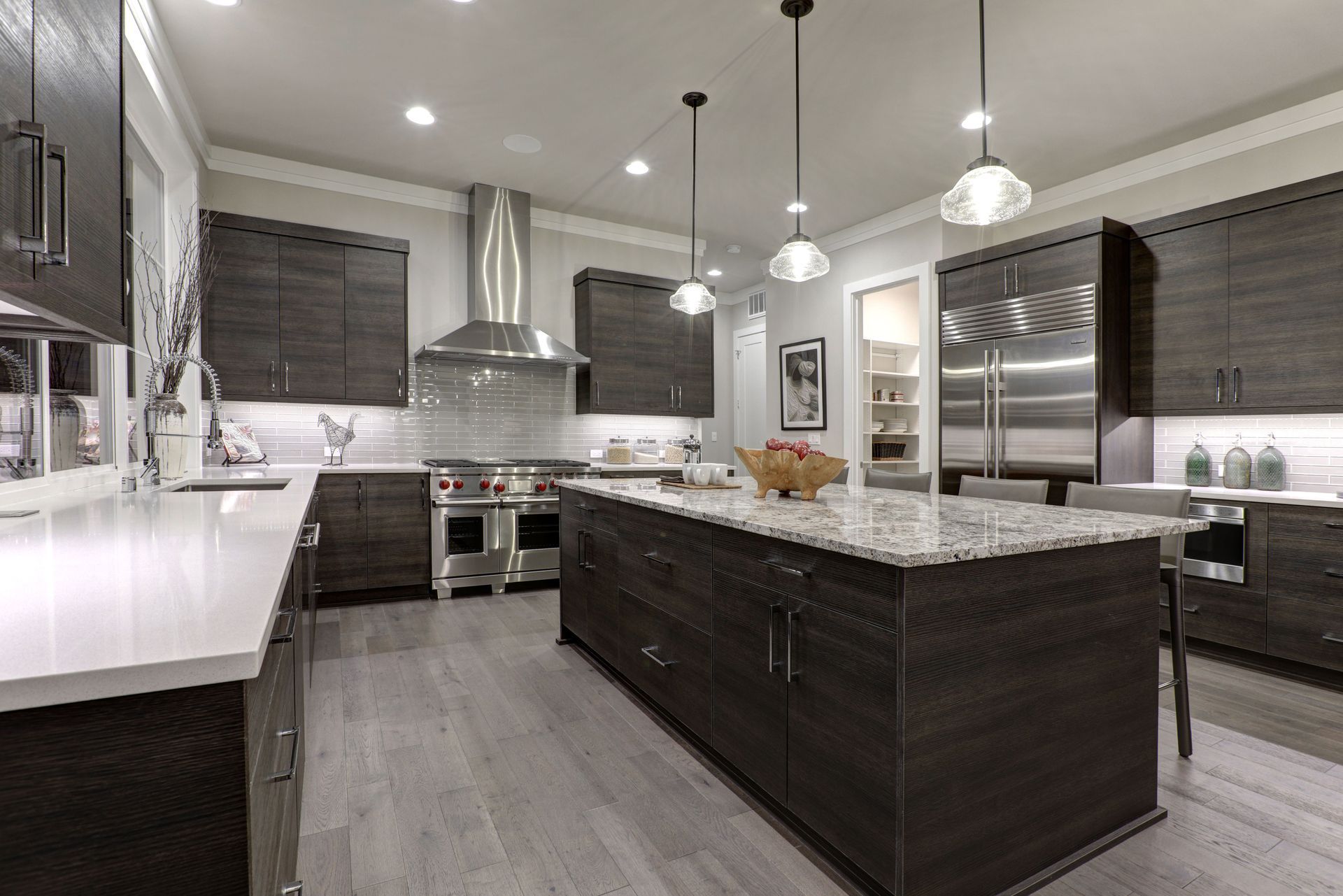
Using more than one cabinet style can create contrast and make different areas of the kitchen stand out. For example, upper cabinets may feature a lighter color while lower units use a darker shade to add depth. An island can also have a different finish from the surrounding cabinetry, creating a distinct focal point. When designing kitchen cabinets, combining styles should still support a unified appearance throughout the room. Similar hardware, complementary colors, or repeated materials can help connect different design choices. Glass-front doors can also be paired with solid doors to create variation without overwhelming the space. Open shelving may provide another opportunity to display decorative items while maintaining a functional layout. A thoughtful combination of elements can add personality while keeping the kitchen visually balanced.
6. Including Details That Improve Functionality
Small design features can make a significant difference in how convenient the kitchen feels. Soft-close doors and drawers can create a smoother experience while reducing unnecessary noise during everyday use. Built-in lighting can improve visibility inside cabinets and make certain areas easier to access. Homeowners may also consider charging stations, hidden outlets, or appliance garages when planning a customized layout. These additions allow kitchen cabinets to support modern routines while maintaining a clean and organized appearance. Details such as rollout shelves can also make items stored toward the back easier to reach. Corner storage solutions may help maximize areas that are often difficult to use efficiently. Including functional details during the design process can help create a space that supports both present and future needs.
7. Creating Focal Points That Reflect Personality
A customized kitchen can include specific features that draw attention and make the room feel more distinctive. A decorative range hood surround, a contrasting island, or glass cabinet doors can all become visual focal points. Homeowners may also choose unique door styles, textured materials, or decorative trim to create a more personalized appearance. These details can help the kitchen feel less like a standard layout and more connected to the overall character of the home. Kitchen cabinets can serve as the foundation for these design choices because they occupy a large portion of the visual space. Adding carefully selected accents can create interest without making the room appear overly busy. The key is to choose focal points that complement the surrounding materials and maintain a balanced design. Personal touches can make the kitchen feel more inviting while giving the room a style that reflects your preferences.
8. Designing a Layout That Supports Daily Living
Customization is not limited to colors, finishes, and decorative details. The overall arrangement of cabinets can also affect how easily you move through the kitchen and complete everyday tasks. Storage should be positioned in areas where it makes sense for food preparation, cooking, cleaning, and serving. Custom kitchen cabinets can be planned around the specific appliances and features you use most often. A well-considered layout can reduce unnecessary movement and make important items easier to access. Homeowners can also use customization to make better use of available wall space, corners, and other areas that may otherwise remain underutilized. Planning around your household’s routines can create a more comfortable and efficient environment for daily activities. A personalized layout allows the kitchen to function in a way that better supports how you actually use the space.
Transform your kitchen with cabinetry designed around your style, storage needs, and everyday routine. Contact Kitchen Gallery Cabinet Design today to explore custom options and start creating a kitchen that feels uniquely your own.